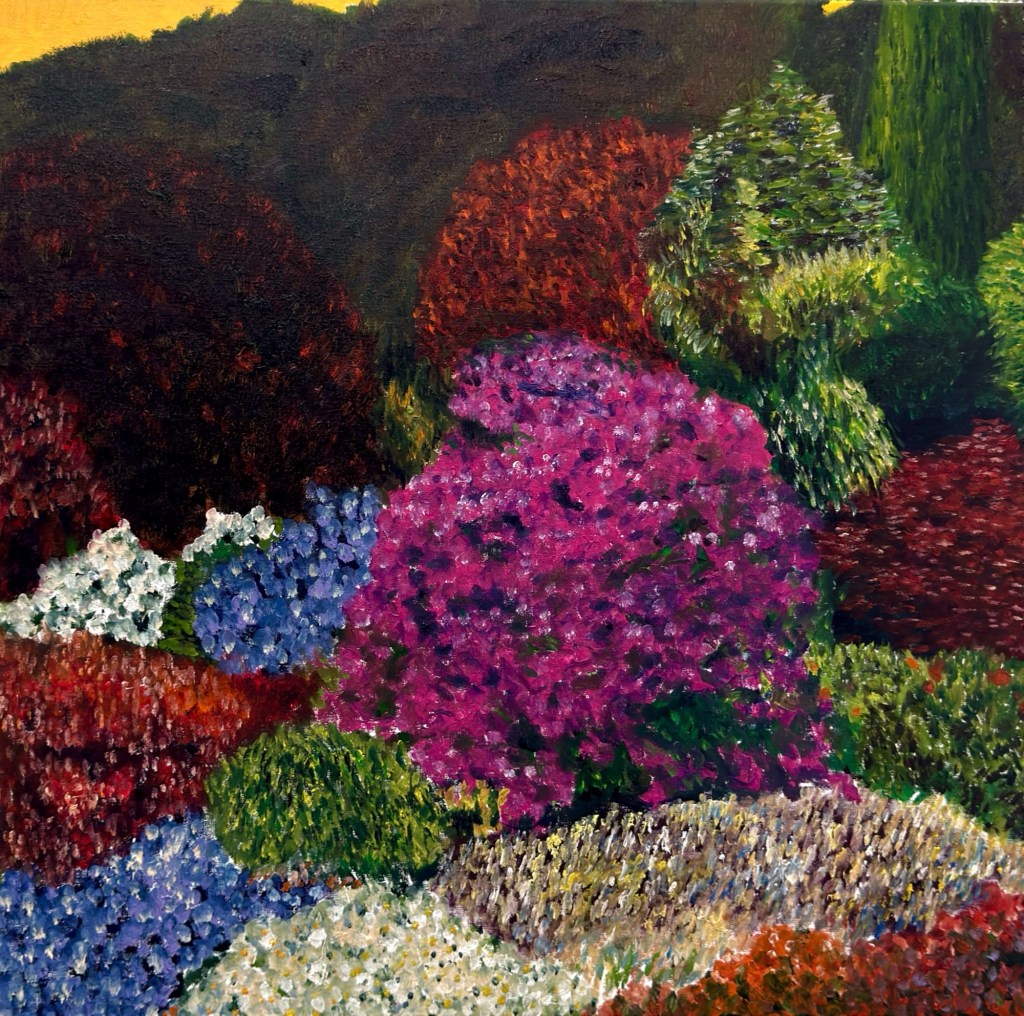
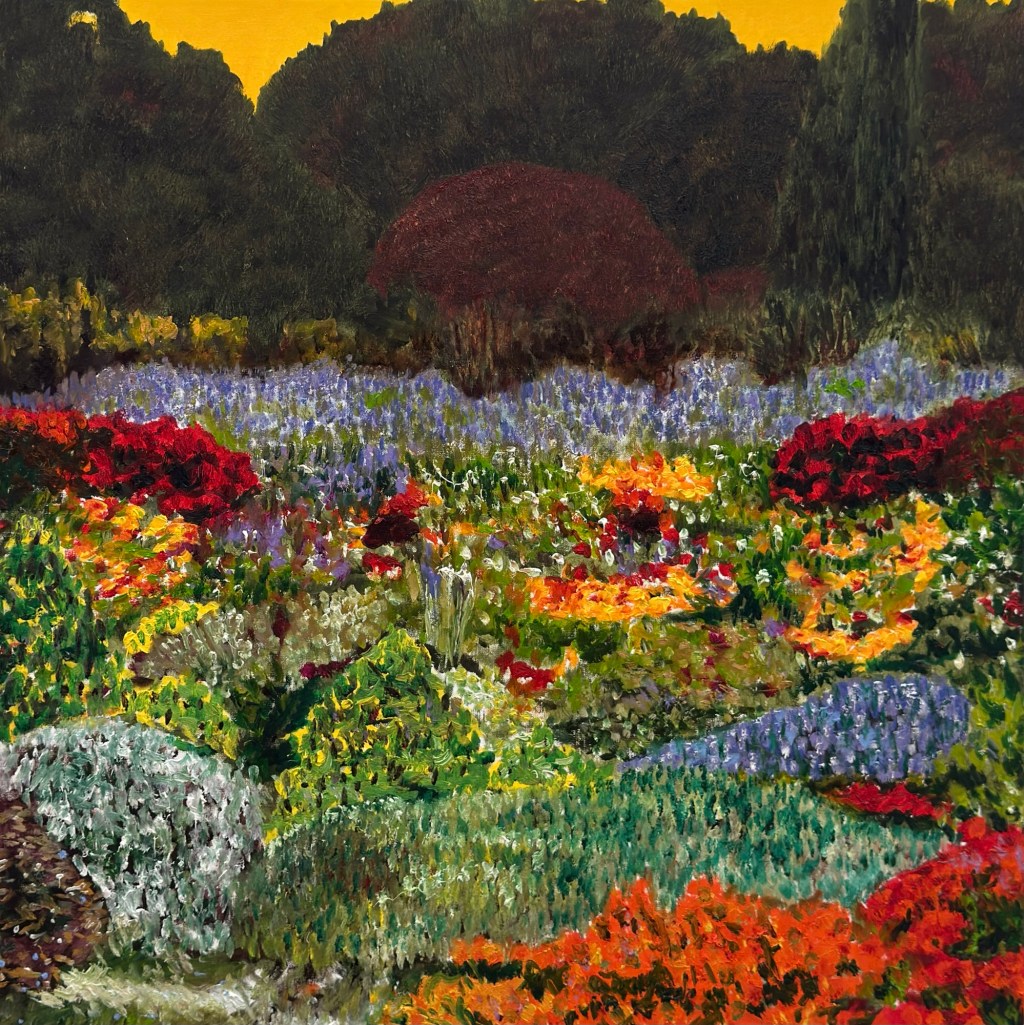
Oil on linen. 66x66cm. 2026.
Tending Towards Wildness: The Garden Paintings
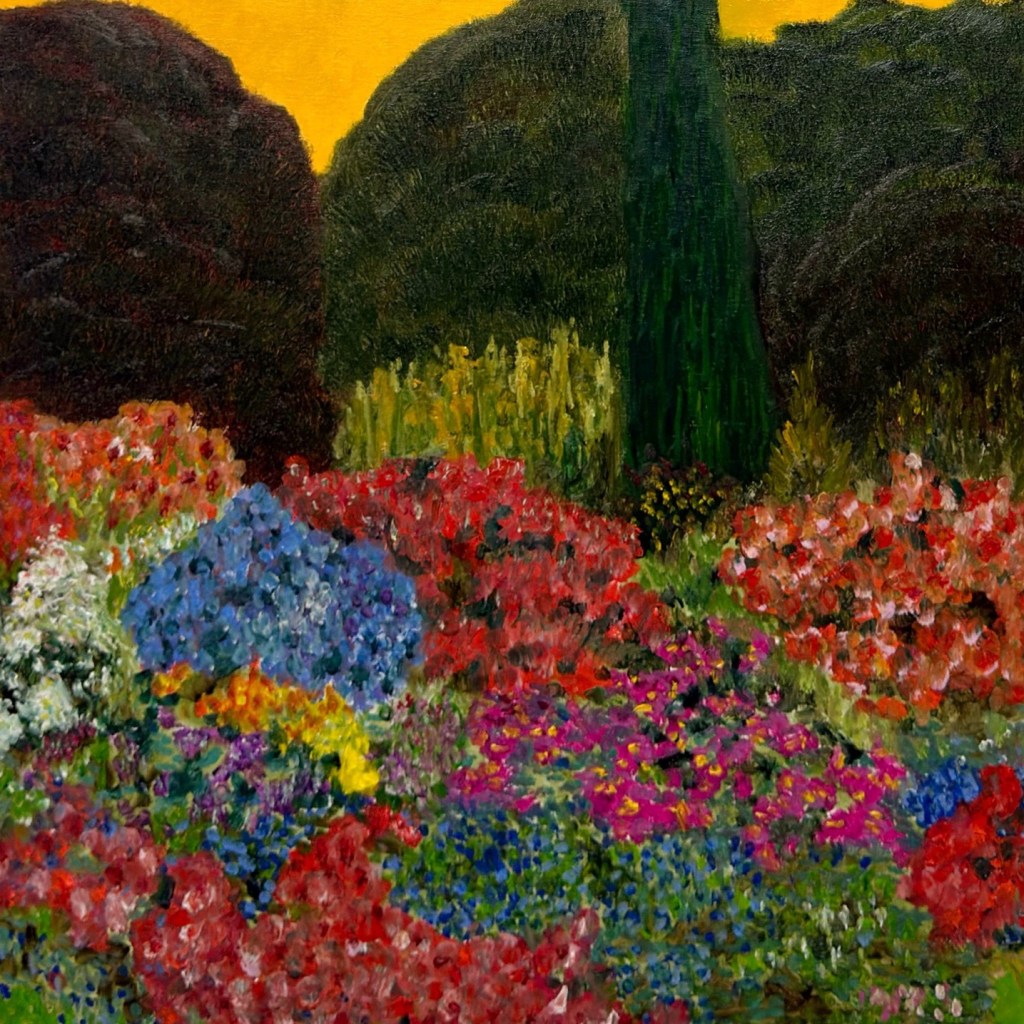
Michael’s garden paintings instantly beguile. The colours and textures of his brushstrokes immediately recall the botanical variety of semi-wild but undoubtedly organised gardens.
Greaves came across this style of painting out of necessity. The artist has sustained permanent nerve damage in his right arm and hand as a result of corrective surgery following an accident. Hence the lovely dabbing of small paint marks to represent a multiplicity of blossoms. Their colour and variety are undoubtedly celebrations of nature and beauty, an affirmation of life and its botanical pleasures.
But something more sinister also lurks beneath. We experience the prettiness of gardens and yet these landscapes – with their artificially luminous skies and crowded foregrounds – are almost suffocating.
These scenes are not simply a representation of reality but something out of the dreamscape. When we come closer, the works have an abstracted quality, dissolving into a plane of colours and textures. The apocalyptic skies and foreboding trees, the claustrophobic pulsing of plants, suggest an anxious almost overwrought state of mind. Thus, these works imply an understanding of the fragility of life, chance and the fact that everything can change in an instant – just like the weather can turn.
Symbols are littered throughout these paintings like clues. The red and orangey-pink flowers seem almost wound-like. And with any wound there is pain but also an opening, en route to a different understanding. Topiared hedges and flowery bushes stand in for gendered anatomies. And we see tall poplar trees littered throughout, referencing a (male) individual. The artist has also played with the convention of ‘the fold’ in a number of these works, signalling an interest in the hidden and how images can open and close. And indeed these works seem to fold in on themselves, merging genres from abstract and figurative painting, to landscape and self-portrait.
In attempting to impose order on our gardens, we also hide histories and legacies. There is an undeniable violence underlying this bucolic ideal. We live during a time when the garden can no longer be experienced as a neutral Arcadia. There is always also a question of power and loss, compromise and complicity, fragility and extinction.
Conversely, gardens can and do exist for the public good and can be a means of nurturing our environment. They are also sites of great care, tenderness and attention. Anyone who has ever had a garden knows how much work it is to maintain. It is a constant effort to pull the weeds, grow the annuals, tame the hedges and mow the lawns. Gardens are constantly pushing back at our attempts to control them, almost yearning to return to their original state of wildness.
Something similar could be said for human psychology. There are endless rules, spoken and unspoken, we are expected to follow – in the ways we dress, speak, work, write, love and even dream. We follow these rules for many reasons – to fulfil our part in the social contract and for our own sense of peace, stability and order. But secretly, there’s a part of us that is like the garden – longing for disorder, tending towards wildness.
Kari Schmidt 2026
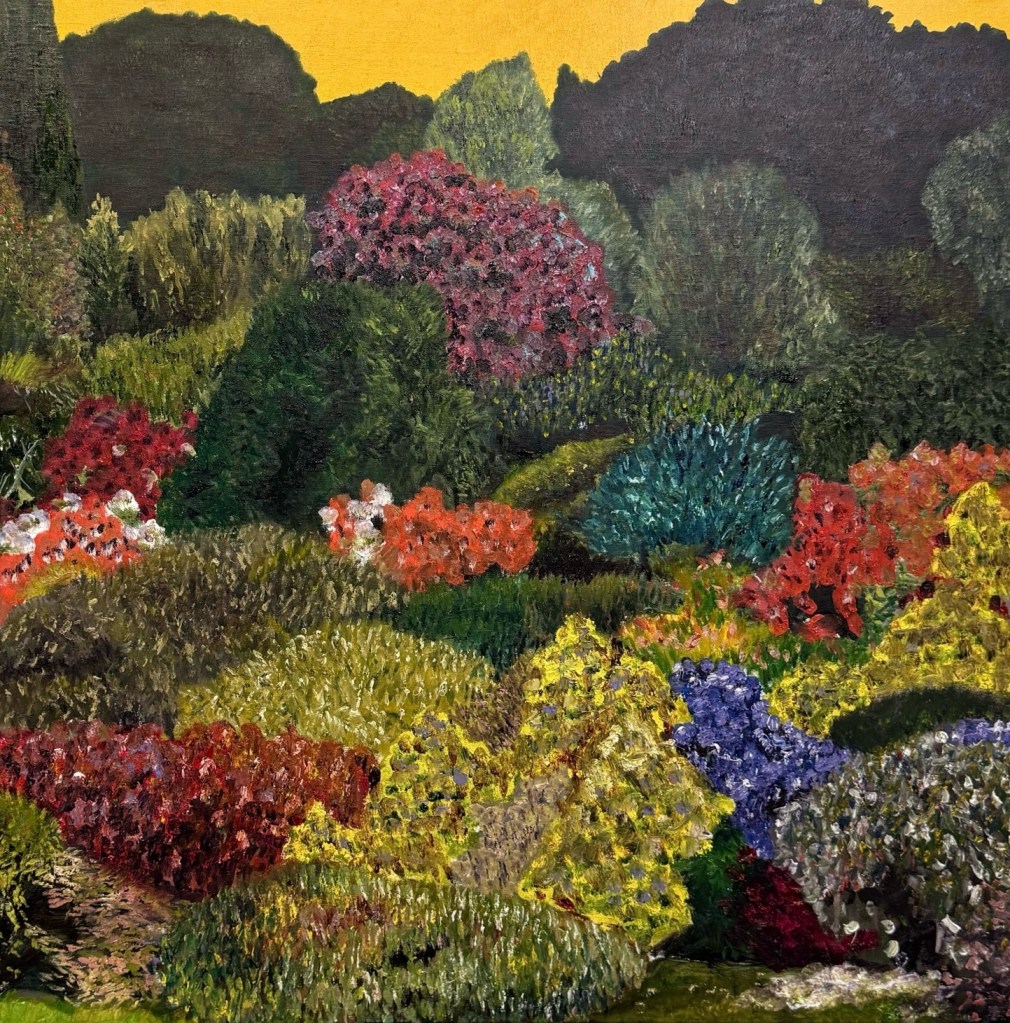
Oil on linen. 66x66cm. 2025.
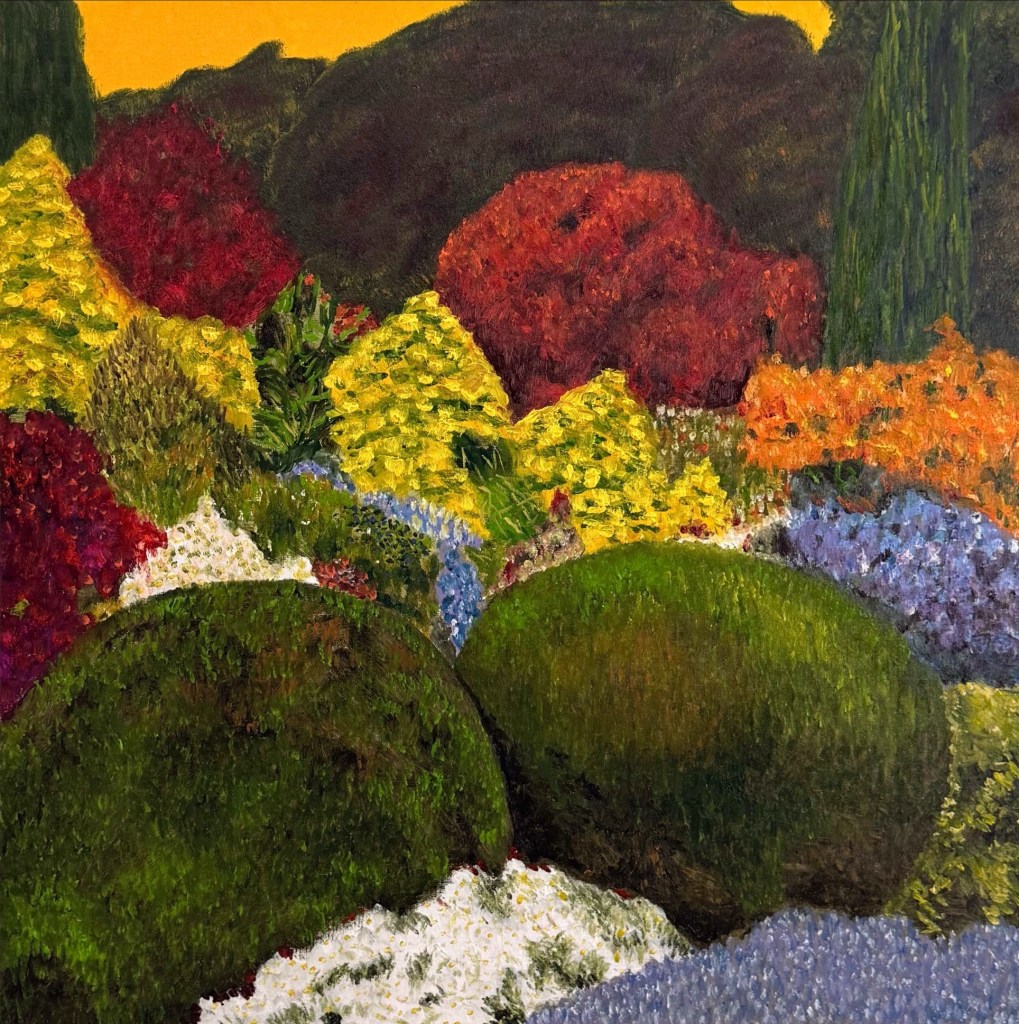
Oil on linen. 56x56cm. 2025.
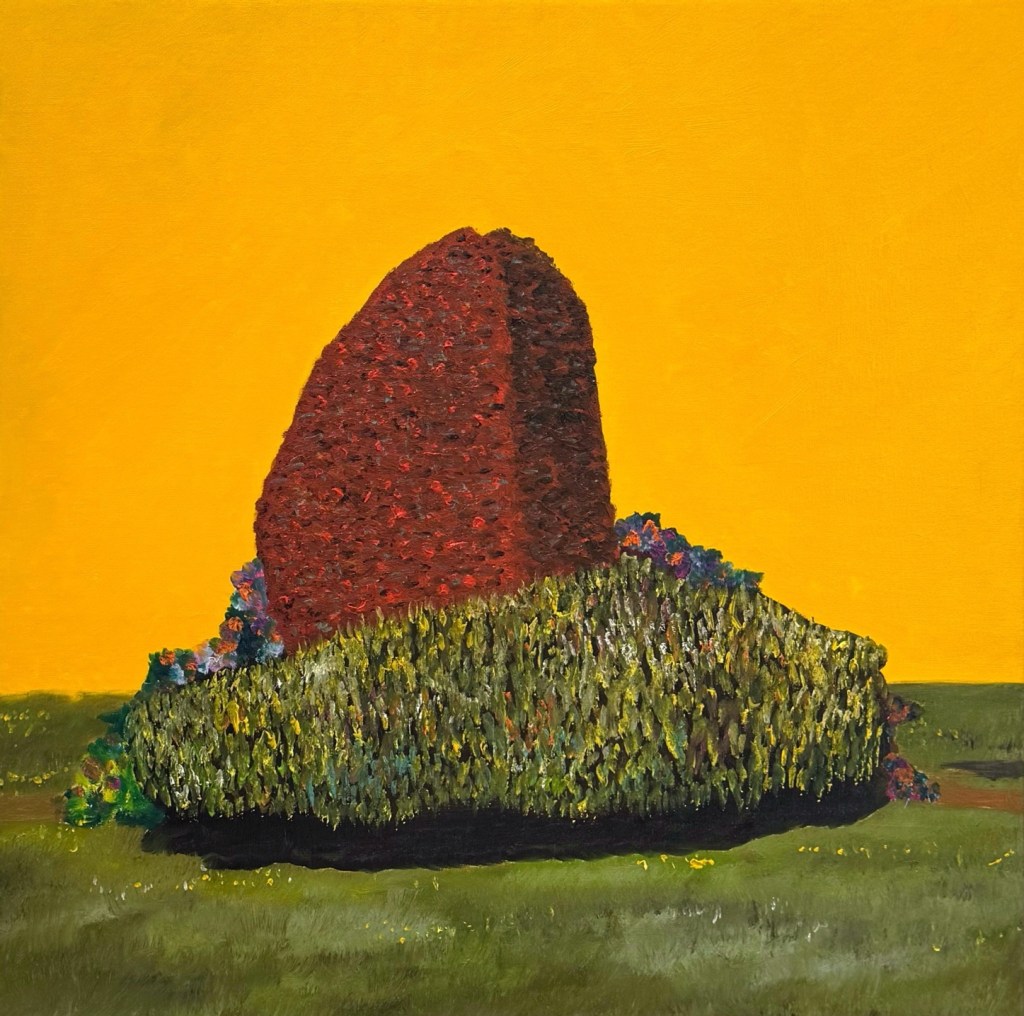
In All Systems Tend Toward Disorder, Michael Greaves turns the garden into a metaphor for perception, a stage where human order meets the inevitability of decay. These paintings are not of nature, but of our urge to frame it, to beautify and control what resists control.
The garden here becomes a mask: a surface of cultivated calm concealing the pulse of disorder beneath. Each brushstroke rehearses this tension, the desire to compose, the acceptance of collapse. Form gathers, disperses, gathers again.
Drawing on Bergson and Merleau-Ponty, Greaves paints perception as something lived and temporal, a conversation between body and world, between seeing and being seen. The works hover between structure and dissolution, memory and immediacy, order and entropy.
What emerges is not landscape, but consciousness itself: a record of our attempts to hold still the passing flow of time. In these shifting, luminous fields, Greaves reveals that beauty is never fixed, it is what flickers, momentarily, before disorder resumes.
James Leigh Van Roche. 2025.
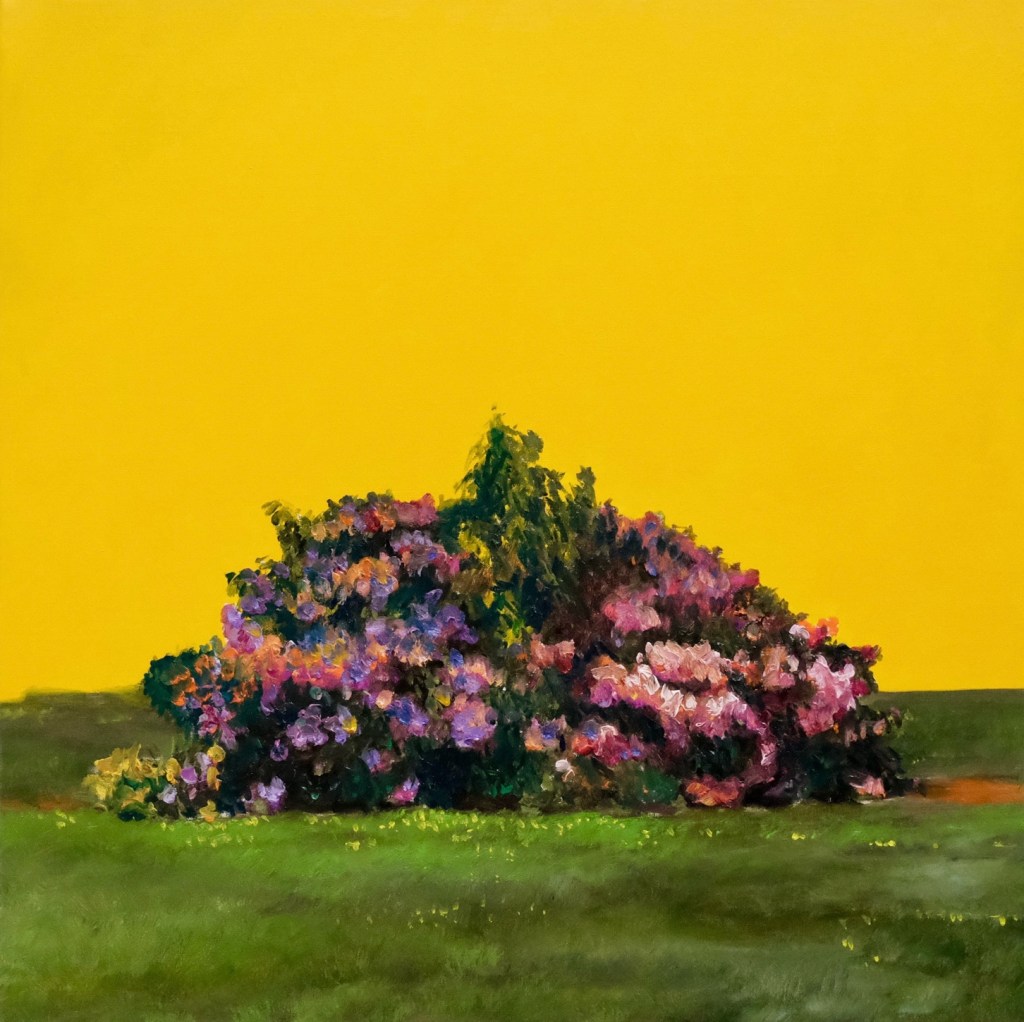

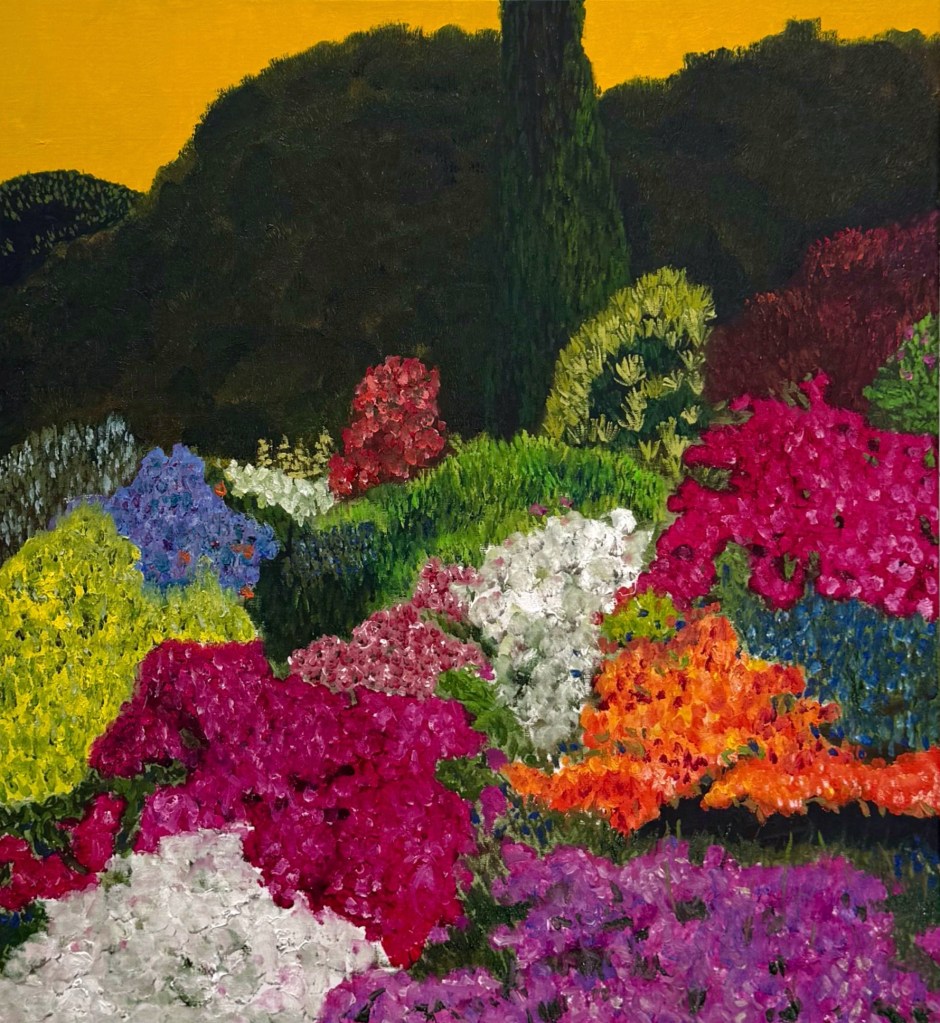
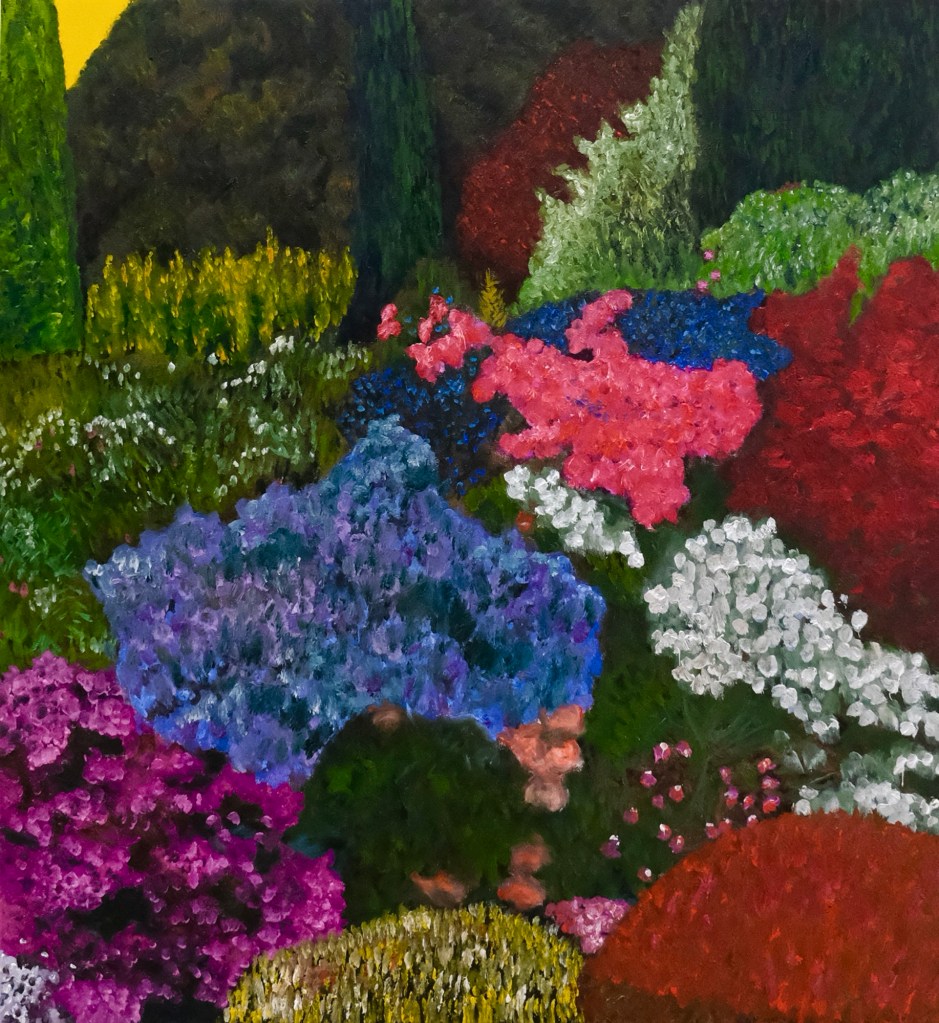


Oil on canvas. 127x174cm. 2025.

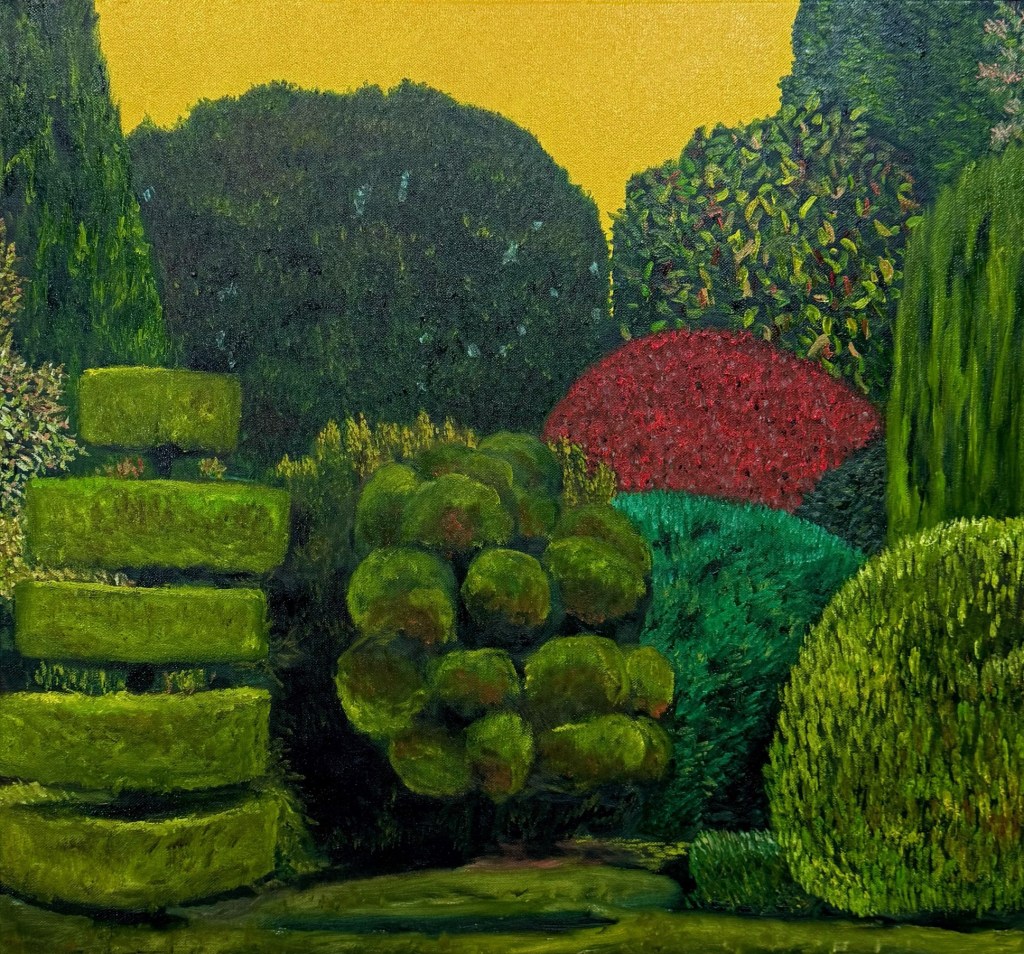
Oil on canvas. 61x56cm. 2025.


Oil on canvas. 56x61cm. 2025.
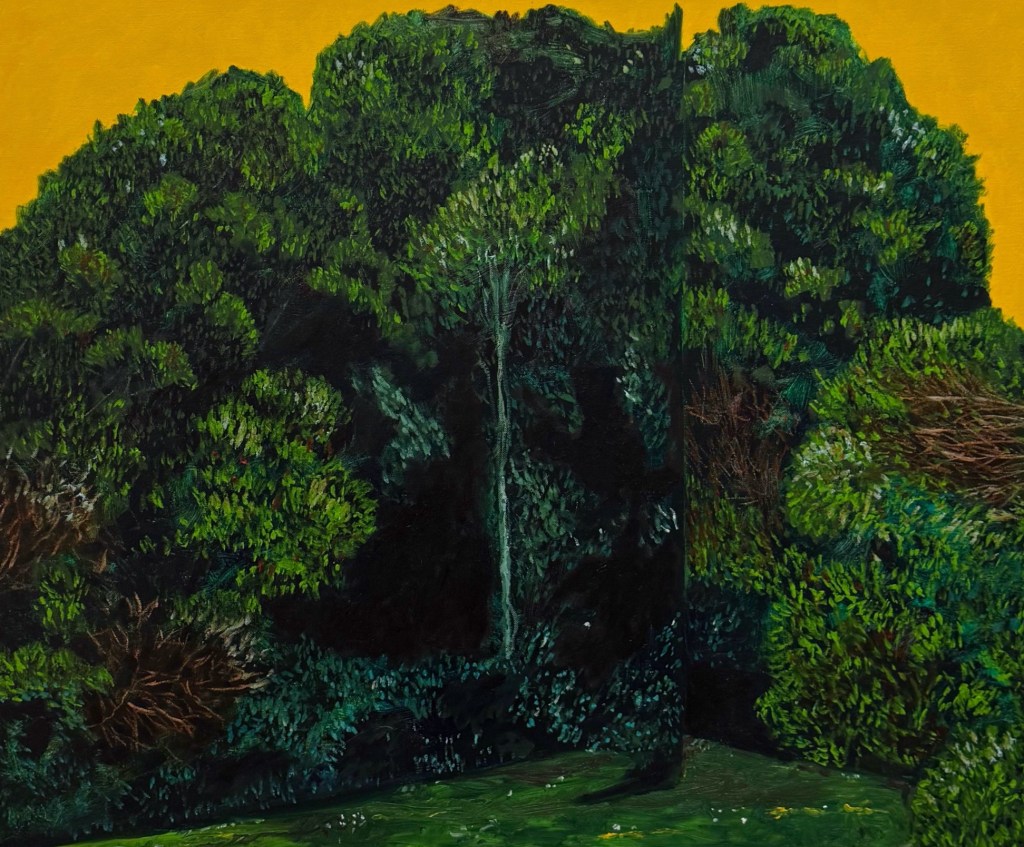
Oil on canvas. 83x66cm. 2025.

Oil on canvas. 56x60cm. 2025

Oil on canvas. 56x60cm. 2025.

Oil on canvas. 56x60cm. 2025.
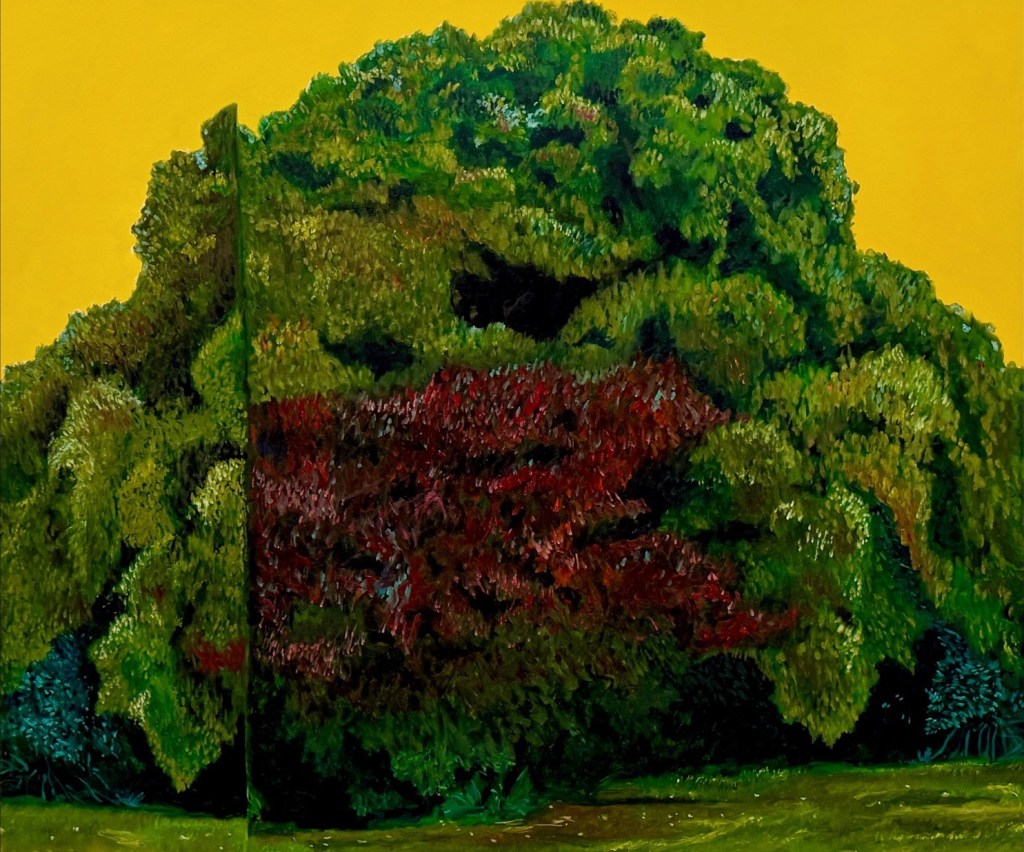

Oil on canvas. 91x106cm. 2025
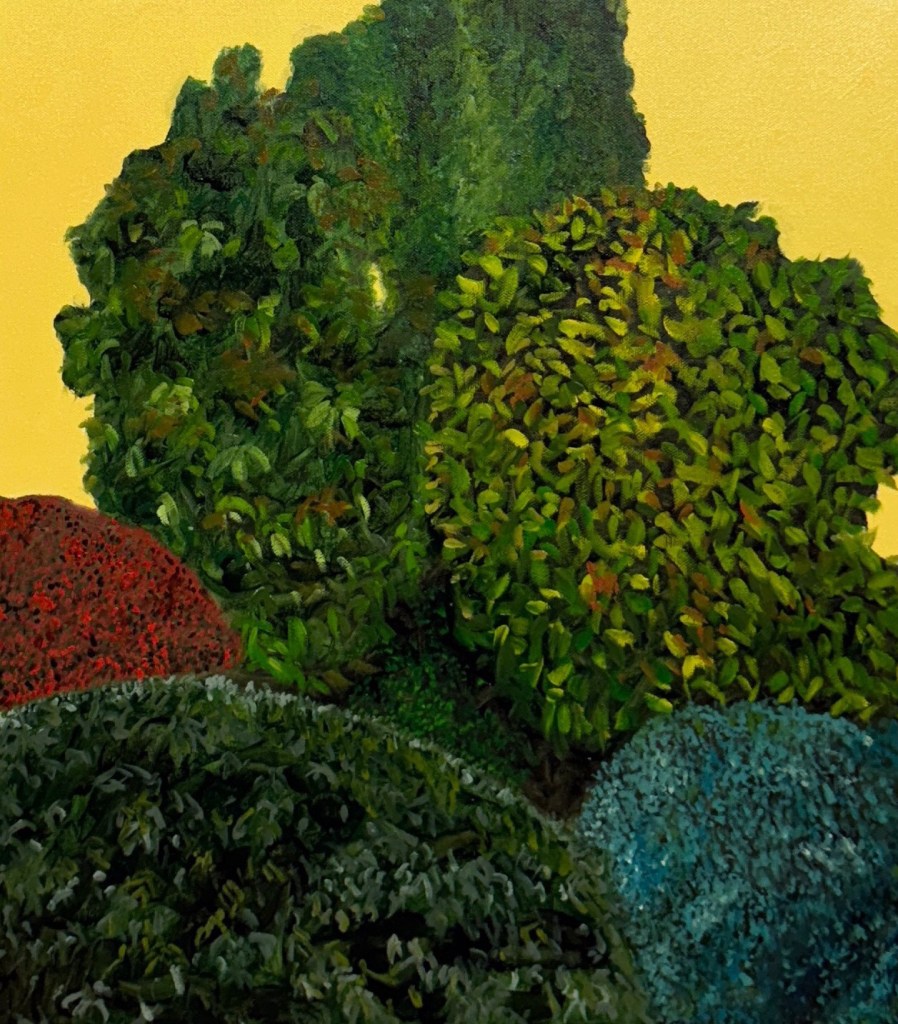

Oil on canvas. 36.5×45.5cm. 2025.

Oil on canvas. 45.5×45.5cm. 2025.
 MICHAEL GREAVES